Few people outside of the profession took much notice when Megan K. Fox was chosen to direct a few EastEnders episodes in 2022. Directors for soap operas come and go, frequently working covertly behind narratives based on tension spanning decades. But Fox didn’t just go into Walford with a festival-slick resume and a decidedly Irish taste for the personal and unusual, she made a subtle but remarkably powerful impression.
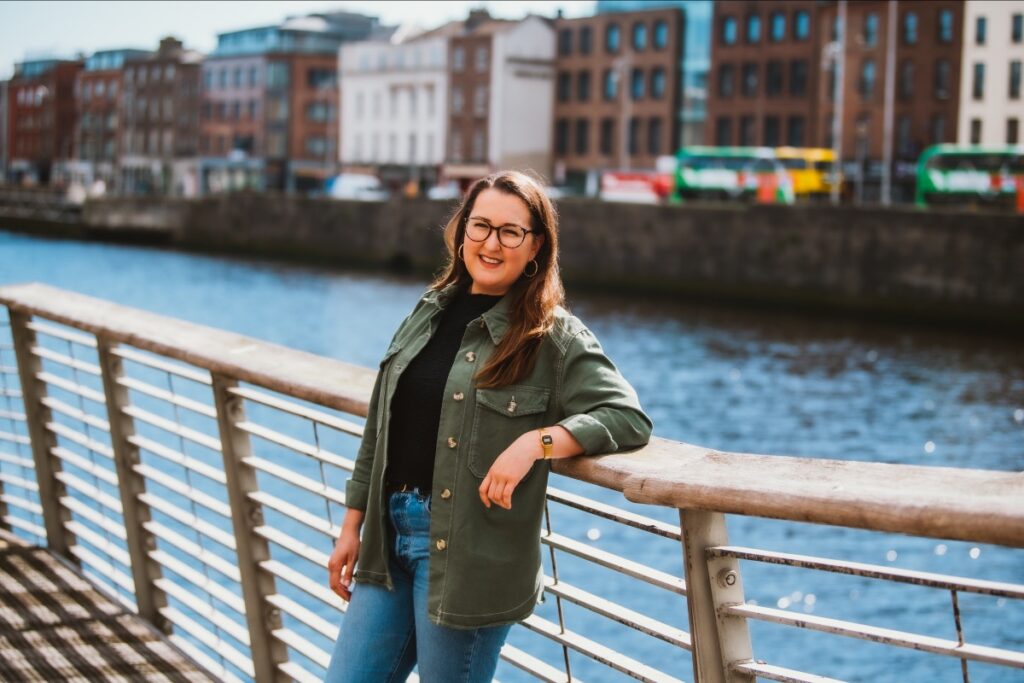
The long-running BBC series’ mechanics were not reinvented during her four-episode stint. The point wasn’t that. It was about the framing choices, tone, and details that jumped out—not loudly, but with assurance. She used distinctly deliberate pauses to guide conversations. Her side looks lingered long enough to arouse curiosity or uneasiness. Fox’s direction slowed down just enough to allow the emotional subtext to breathe, which is refreshing for a show that lives on verbal punchlines and plot-speed pace.
| Name | Megan K. Fox |
|---|---|
| Nationality | Irish |
| Professions | Writer, Director |
| Known For | EastEnders, Too Good to Be True, Fair City, Video Nasty |
| Style | Absurd comedy, hybrid genre, social outliers with heart and humor |
| Education | Met Film School London (MA Directing), Trinity College Dublin (MA Screenwriting) |
| Representative | Christian Ogunbanjo, United Agents |
| Reference |
Fox was already getting her start in the daily drama craziness even before EastEnders. She directed around 40 episodes of Ireland’s Fair City between 2019 and 2022. With its tight budgets, emotionally charged content, and quick production cycles, it was an incredible training ground. She approached it as a creative gym rather than being limited by the format. Muscle was developed by the repetitions. Her storytelling became noticeably more adaptable, and she developed a more accurate sense of visual rhythm.
It is evident in a little moment she directed in which two mourning characters enjoy a mug of tea in silence. Steam rising, hands shaking, no exposition, no swelling music. It was almost obtrusive to watch, so remarkably quiet and clear. It dawned on me then that Fox may generate suspense without resorting to spectacle. In serialized television, stillness is fairly uncommon, but she trusts it.
Her early experiences in short films are the source of her confidence. Calling Home (2017), The Shift (2018), and GIRL (2016) all carved out their own microcosm of genre-tinged, character-driven reality. Her shorts have performances that seem more lived-in than staged. Her characters are meant to be understood rather than liked. particularly those who don’t fit neatly into society’s preconceived notions, such as awkward teenagers, bereaved mothers, and lonely boys with damaged egos. She is incredibly good at bringing the quiet defiance of emotional outsiders to the screen, and she has a soft place for them.
In soap operas, where drama frequently revolves around well-known themes like infidelity, criminality, and generational conflict, this focus in societal boundaries translated nicely. However, Fox is able to slightly tilt that lens in order to reveal new perspectives. Even minor characters appeared to have significantly improved throughout her tenure at EastEnders. Tighter framing, more expressive facial expressions, and brief pauses were used to give extras who usually float through pub scenes a sense of presence.
She didn’t use gimmicks in her episode arcs. Rather, she added significance to ordinary events, such as finding an earring or leaving a door slightly open. Her instincts produced a sense of quiet that felt earned in a fast-paced show, even though they are hardly innovative tactics. And that silence was a pleasant change of pace for viewers who were accustomed to the show’s cadence.
Fox appears to view television credits as collaborative spaces, whereas many other filmmakers utilize them as stepping stones. Instead of eliminating the show’s voice, she modifies it significantly to suit her own. Her most recent endeavors, such Video Nasty for BBC/Virgin Media and Too Good to Be True for Channel 5, exhibit the same blend of respect and uniqueness. She follows the rules of the genre, but where others might settle for speed, she adds texture.
Even as her audience grows, she continues to favor hybrid storytelling and ridiculous comedy. She uses tonal discord to weave wry comedy through psychological strain or to place quiet mourning inside horror. And this fun is particularly evident in her Video Nasty episodes. She manages to discover a moment of visual absurdity in the midst of abrupt plot twists, such as a dog staring too long at a broken TV or a teenager wearing sunglasses in the rain.
She developed her early voice by using festival exposure and public arts financing to tell short, targeted stories. Fox created works that were shockingly inexpensive yet richly observed with assistance from groups like Film in Cork and the Arts Council of Ireland. She was skilled at making emotional and visual use of space. In Cailín Álainn, the weight of a lone kitchen table was greater than that of many whole casts.
The anticipation is growing along with her platform. Although she hasn’t yet directed a full-length movie, her career path doesn’t seem hurried. She carefully selects each project, as though she’s mapping out a story across all media—shorts, soap operas, and serial thrillers. To “level up” to prestige, there is no rush. Rather of ascending ladders, she is demonstrating how to operate horizontally by changing lanes.
During a Q&A at the Newport Beach Film Festival, she said something that stuck with me: “You can’t force intimacy on a story.” You must wait for it to want to respond with something. Although it was a subtle remark, it provided a greater explanation of her style than any evaluation. She guides without being overbearing, as if she’s listening. That patience works incredibly well in a variety of genres.
By 2025, Megan K. Fox’s list of TV projects is expanding, and she is moving purposefully and confidently in the direction of greater creative control. She is not attempting to disobey the law. With each subtle camera angle and character who appears slightly off-center, she is merely redefining expectations.