Tim Davie’s financial footprint is at the center of a discussion that feels especially illuminating, especially given that his time at the BBC has come to an end under unusually close scrutiny. Although his estimated net worth of £2 million might seem tiny at first, each figure represents a story of self-control, discipline, and surprisingly intricate professional navigation. In recent months, interest in his money has become remarkably comparable to the obsession with cultural leaders who bear the emotional burden of leading a national institution, political demands, and public expectations.
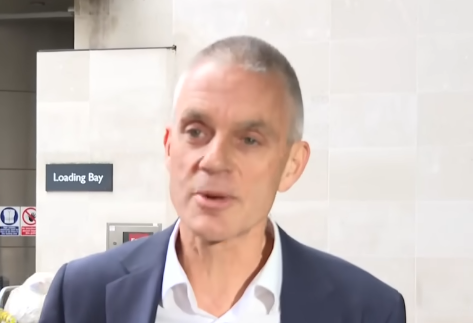
His childhood influenced his persistent approach to ambition, which is where his story starts. Davie was born in Croydon in 1967 and soon established himself academically at Whitgift School before attending Selwyn College in Cambridge. His classmates from that era generally remember him as being remarkably clear-headed, self-assured but not pompous, and remarkably interested in the ways that culture influences civic behavior. These qualities eventually proved especially useful when he assumed leadership positions requiring careful management of institutional responsibilities and public sentiment.
| Detail | Information |
|---|---|
| Full Name | Timothy Douglas Davie |
| Birthdate | 25 April 1967 |
| Birthplace | Croydon, London, England |
| Education | Selwyn College, Cambridge |
| Spouse | Anne Claire Shotbolt (m. 1997) |
| Children | 3 |
| Key Roles | Director-General, BBC (2020–2025); Acting DG (2012–2013); CEO BBC Studios; Chairman Comic Relief; Trustee Tate & RTS |
| Estimated Net Worth (2025) | £2 million |
| Major Earnings | BBC Salary £2.8m cumulative (2020–2025); BBC Studios £400k; PepsiCo £600k; Property assets £4m |
| Property | Farmhouse + land, East Twickenham |
| Reference Link |
In the early 1990s, he ran as a Conservative candidate in the London council elections, marking an unexpected turn in his early political career. Despite its failure, the event greatly enhanced his comprehension of public message and communal issues. After that brief stint in politics, he made the business jump to PepsiCo, where his marketing career took off. His colleagues from that era characterize him as exceptionally effective and highly efficient at connecting innovative strategy with realistic implementation. His estimated £600,000 in revenues from that phase served as the foundation for his eventually meticulously planned personal financial strategy.
By 2005, Davie had joined the BBC with business acumen and a composed leadership style that was incredibly dependable in trying times. After the Jimmy Savile allegations revealed serious ethical shortcomings, the company was in a crisis when he took over as acting director-general in 2012. As senior officials battled to win back the public’s trust, Davie filled that void with a strategy that was especially novel for its time, emphasizing stability and transparency. His internal image was altered by those months, establishing him as a person who could handle stress without turning to showmanship.
His long-term financial picture was significantly enhanced by his pay during that time and later at BBC Studios. In addition to bringing in about £400,000 overall, his position at BBC Studios expanded his influence into high-level brand partnerships, commercial distribution, and worldwide content strategy. Even yet, he continued to have very conservative financial practices. According to friends, he steered clear of the speculative risks that many executives with comparable salaries are drawn to, made thoughtful investments, and preferred to make measured decisions. Durability was given top priority in the resulting portfolio, which included a farmhouse and East Twickenham land that are still among his most prized possessions today.
During one of the most turbulent periods in recent British media history, Davie was at the forefront of national cultural discourse after being appointed director-general of the BBC in 2020. His total compensation over five years was £2.8 million. However, the difficulties of the job—public scrutiny, internal reorganization, and political tension—made it much less likely that one would enjoy the lifestyle that comes with high executive salary. According to a number of insiders, the work required an incredible amount of time, effort, and emotional resources. He was frequently observed running before morning, using those peaceful times to reflect on the problems of the day. This practice demonstrated how well he internalized the responsibilities of the position.
Major institutions, including broadcasters, were facing the test of public trust throughout his tenure. The BBC managed discussions about representation, impartiality, digital development, and pressure from the government. Due to these difficulties, Davie was constantly, and occasionally awkwardly, thrust into the spotlight as he defended decisions in an environment where the speed of reform felt far slower than the hunger for criticism. Nevertheless, he promoted programs to update production processes and reassert the BBC’s cultural significance. Some of these adjustments, such as digital-first commissioning, have improved productivity while preserving creative reach and have been unexpectedly inexpensive for the company.
Accusations of editorial prejudice led to his resignation in November 2025, although some who closely watched the issue contend that there were more pressures than just one dispute. Davie, who had always adopted a remarkably balanced, soft-spoken style, found himself negotiating crossfires that grew more intense with each passing year as the position had turned into a symbolic battleground for conflicting political demands. His departure mirrored the trend observed in media leadership positions around the world, where executives who interact with the public are increasingly expected to uphold moral principles, diffuse tensions, and take in popular annoyance.
Davie’s money tale, however, is still realistic and not ostentatious. His £2 million liquid net worth is comfortably, but not unreasonably, within the range of high-ranking public sector personnel. It emphasizes a fact that is sometimes forgotten: running a cultural organization is rarely a means of achieving enormous personal fortune. Instead, it provides power, accountability, and the opportunity to affect public discourse. Davie accepted that duty with a temperament that others considered to be extraordinarily adaptable—capable of smoothly transitioning between executive decision-making, creative discussion, and public speaking.
He was also dedicated to cultural preservation and philanthropy. Davie had a significant influence on Britain’s cultural landscape as chair of Comic Relief, trustee of Tate and the Royal Television Society, and head of the Creative Industries Council. These positions greatly increased his prominence in artistic and civic circles, but they did not considerably increase his net worth. They showed his interest in developing new talent, bolstering institutions that sustain national identity, and encouraging creativity at a structural level.
The emotional and intellectual expenses of decades of public leadership are often overlooked by experts today when they analyze his financial profile. Davie’s trip raises concerns about whether remuneration systems should change to match growing challenges and how much stress is reasonable to expect from directors of publicly financed institutions. By automating processes, broadening content ecosystems, and increasing digital reach, modern leadership is revolutionizing businesses, as demonstrated by his case. However, it also necessitates emotional resilience, which is hard to measure financially.
There’s also a hint of hope in his story. It implies that those who value cultural heritage over material prosperity are nonetheless drawn to public service, despite its demands. In a time when commercial incentives rule so many industries, the tale feels especially comforting. Davie showed something remarkably comparable to civic dedication by taking on and persevering in jobs that required more of him than they materially repaid.